Meet Your Faculty
Gelan Ayana Zewdie
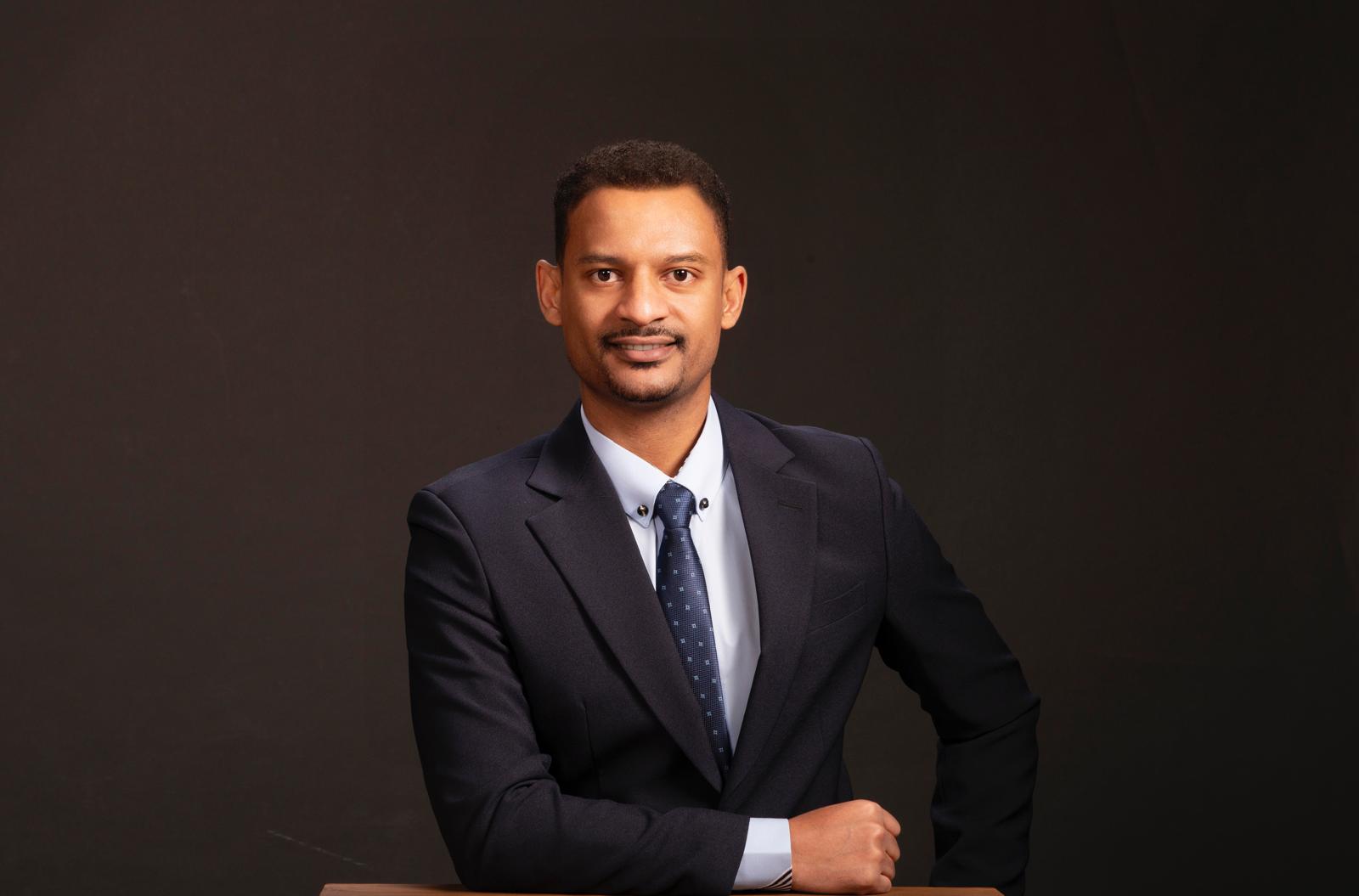
Provost’s Postdoctoral Fellow
Dalla Lana School of Public Health, University of Toronto
Toronto, ON
Dr. Gelan Ayana Zewdie is a Provost’s Postdoctoral Fellow at Artificial Intelligence and Mathematical Modelling Lab (AIMMLab), Dalla Lana School of Public Health, University of Toronto. Motivated by firsthand observations of the challenges faced by health systems in low-resource settings, Dr. Zewdie has dedicated his career to harnessing artificial intelligence (AI) for disease surveillance, diagnosis, and equitable healthcare delivery. His work encompasses health data analysis, multimodal AI models for early disease detection, and digital health solutions designed for community use.
Dr. Zewdie’s research is shaped by a defining childhood moment in Ethiopia, when a simple community report uncovered a polio case in his neighbourhood, prompting rapid vaccination for him and many of his friends. He is now working to translate that same community power into a digital platform called Haqila, which leverages AI to strengthen early disease detection in underserved communities. In Haqila, authorized users can write and upload a short report about their health issue and include a photo or video to illustrate their concern. The AI system then analyzes the data and alerts a nearby health officer to respond. In the meantime, Haqila provides users with basic information on mitigation measures. The tool also works offline. If a user doesn’t have internet access, it collects the information, stores it locally and sends the report to health officials once a connection is restored. The tool can be used to identify cases of polio, measles and mpox. It also captures basic location data to identify emerging case clusters, which is visualized in a dashboard. Haqila currently supports Amharic, Afaan Oromo and English. His ultimate goal is to expand Haqila to support outbreak detection and early screening for multiple diseases, including infectious diseases, MCH, NTD, COPD, and even NCD, while adding multilingual and audio-based reporting to better serve low-resource communities.
Dr. Zewdie’s research has been recognized with numerous accolades, including the Korean Ministry of Education’s Academic Excellence Award, the American Association for Cancer Research–Sanofi Scholar-in-Training Award, the University of Toronto’s Provost’s Postdoctoral Fellowship, the Black Research Network (BRN) IGNITE Grant, the Emerging and Pandemic Infections Consortium (EPIC) grant, and recognition as a Rising Star Scientist by the Bill and Melinda Gates Foundation. His contributions have been published in leading scientific journals and presented at major international forums, including the Grand Challenges Annual Meeting, the IEEE Engineering in Medicine and Biology Conference, the American Association for Cancer Research Annual Meeting, and the Science Summit at the United Nations General Assembly.
To translate his innovative research into practical impact, Dr. Zewdie co-founded Haqila Lab, an initiative advancing responsible AI solutions for disease surveillance and diagnosis and health system strengthening. He has secured grants and partnerships with organizations such as Grand Challenges Ethiopia, the Dutch organization for internationalization in education (Nuffic) CINOP Global, the Canadian International Development Research Centre (IDRC), and the UK’s Foreign, Commonwealth & Development Office (FCDO). His work and perspectives have been featured by Ethiopia’s leading national media outlets, including ETV, FBC, and OBN.
Dr. Zewdie is serving as a committee member for the Coalition for Health AI Innovation and Ethics (CHOICE) Working Group led by the Pan-African Bioethics Initiative (PABIN), Armauer Hansen Research Institute (AHRI), and Africa CDC and also contributes to the scientific community as a committee member and ambassador for organizations including the American Society of Tropical Medicine and Hygiene (ASTMH), Global South Artificial Intelligence for Pandemic and Epidemic Preparedness Network (AI4PEP), Artificial Intelligence for Global Health (AI4GH), the European Association for Cancer Research (EACR), and other international networks dedicated to advancing science and health equity. In addition, he serves as a mentor in Black in AI’s Emerging Leaders in AI (ELAI) program and the IEEE Engineering in Medicine and Biology Society (EMBS) Student Activities Committee (SAC) mentorship program, supporting aspiring researchers and leaders around the world.